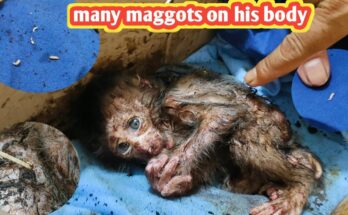
The sight of newborn baby monkeys at the animal market was heartbreaking. They were incredibly small, far too small for creatures meant to cling to their mothers’ fur, their fragile bodies trembling in the open air. Born prematurely, their eyes were barely open, and their tiny fingers curled weakly as if searching for warmth that was no longer there. The market was loud and chaotic, filled with unfamiliar smells, harsh voices, and curious stares—an environment no newborn should ever experience.
Their fur was matted with dirt and dried fluids, a clear sign of how little care they had received since birth. Cleaning them became an act of quiet compassion in the middle of an otherwise cruel scene. Warm water was prepared carefully, tested again and again to make sure it would not shock their delicate skin. Soft cloths replaced rough hands, moving slowly, gently, as if every motion needed permission. Each wipe revealed how tiny they truly were—bones fragile, skin thin, lives hanging by a thread.
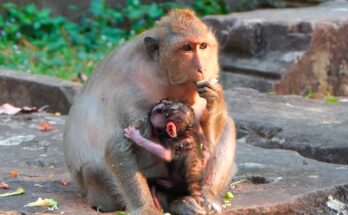
The monkeys reacted weakly but instinctively. A small shiver, a faint grip around a finger, a barely audible sound that felt like a plea. These moments made it impossible to ignore how wrong the situation was. Newborn monkeys are meant to be pressed against their mothers’ chests, learning the world through touch and heartbeat, not displayed like objects in a market. The poor taste of such trade was painfully obvious, turning living beings into commodities without regard for suffering.
As the dirt washed away, their faces became clearer—soft, innocent, and utterly vulnerable. Cleaning them was not just about hygiene; it was about restoring a small piece of dignity that had been stripped away. Each cleaned limb felt like a promise, even if an uncertain one, that someone still cared enough to try.
Yet no amount of gentle cleaning could erase the larger truth. These baby monkeys were victims of a system that prioritizes profit over life. Premature, weak, and exposed, they represented the hidden cost of animal markets that operate without compassion or responsibility.
In the end, the act of cleaning was both tender and tragic. It was a reminder that kindness still exists, even in places where it should not have to fight so hard to survive. And it left a lingering question behind—how many more fragile lives must endure this before we finally decide that some things should never be sold at all?